
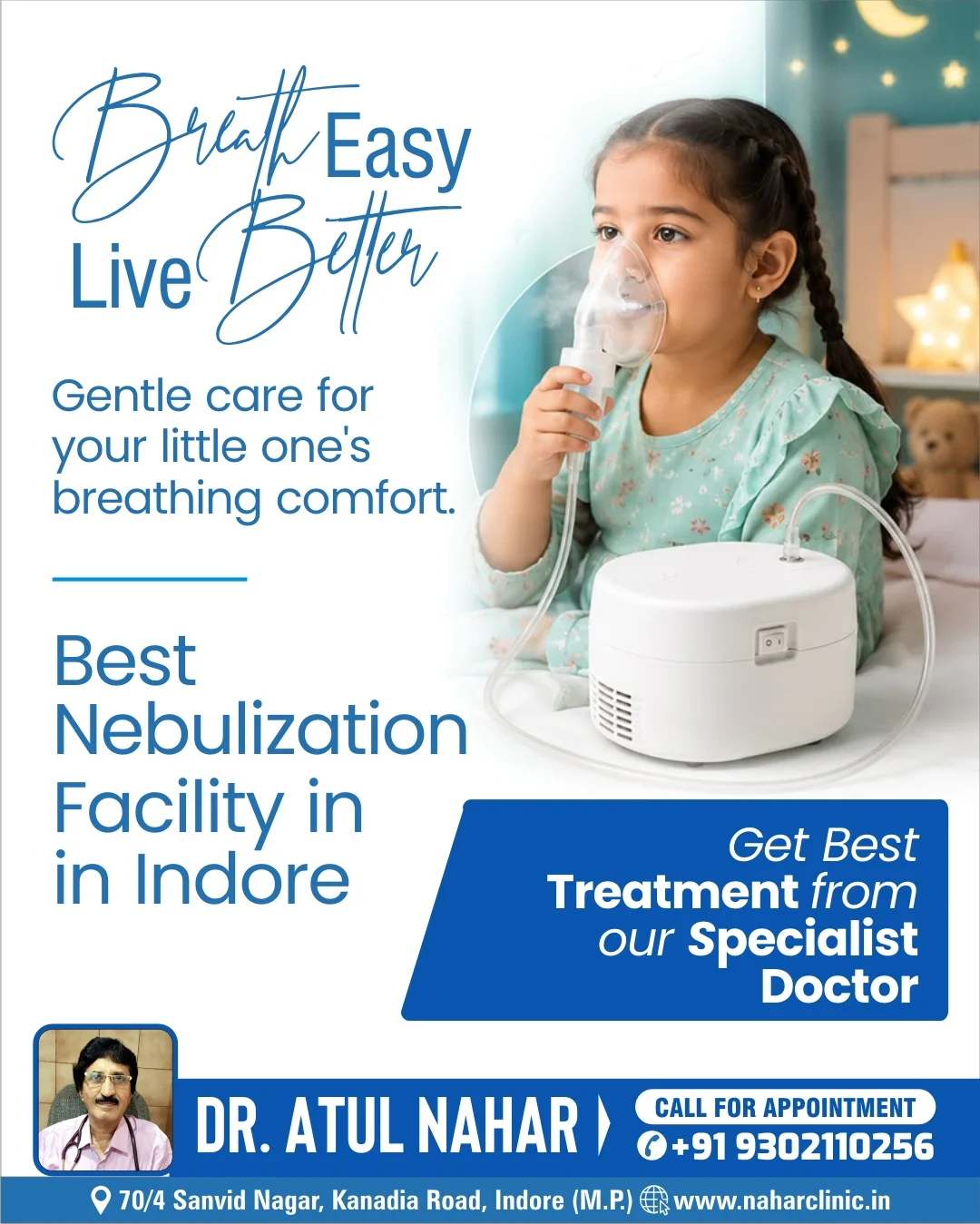
Best Nebulization Facility in Indore – Dr. Atul Nahar
Professional Nebulization Treatment in Indore for Better Breathing
Breathing difficulties, persistent coughing, wheezing, and chest tightness can impact daily activities and overall comfort. Nebulization is a method in which prescription medication is delivered directly into the airways in the form of a fine mist, allowing patients to receive respiratory treatment under the supervision of a qualified healthcare professional.
If you are looking for the best nebulization facility in Indore, Dr. Atul Nahar may be a healthcare option for patients seeking guidance and medical assistance for respiratory problems. A suitable nebulization facility should focus on proper patient assessment, appropriate medication administration, cleanliness, and monitoring based on the patient's condition.
Nebulization may be recommended for some respiratory conditions, such as asthma, wheezing, and obstructive airway disease. The need for nebulization depends on the patient's symptoms, medical history, age, and clinical assessment. It's important to remember that nebulization isn't necessary for every cough, cold, or breathing problem. Patients should consult a qualified healthcare professional before starting nebulization, especially if symptoms are severe, persistent, or recurring. The goal is to identify the underlying cause of symptoms and provide appropriate care, rather than relying solely on temporary relief.
What is nebulization?
Nebulization is a respiratory treatment in which a nebulizer machine converts liquid medication into a fine aerosol mist that can be inhaled through a mouthpiece or face mask. The medication is delivered to the airways, where it can help manage specific airway conditions as directed.
Unlike oral medication, which is swallowed, nebulized medication is inhaled directly into the respiratory system. Depending on the medication used, it may help open narrowed airways or supplement other recommended breathing treatments.
Nebulization may be considered for children and adults who require inhaled medication, including some patients who find it difficult to use metered-dose inhalers. However, the choice of a nebulizer, inhaler, or other treatment method should be based on medical advice.
When is nebulization recommended?
A healthcare professional may recommend nebulization for certain conditions, depending on the diagnosis and severity of symptoms.
1. Asthma and Wheezing
Asthma can cause inflammation and narrowing of the airways, leading to wheezing, coughing, chest tightness, and difficulty breathing. Prescription medication may help relieve airway constriction during some asthma episodes.
Nebulization may be an option in some situations, but inhalers with spacers can also be effective and may be preferred based on the patient's needs and the prescribed treatment plan.
2. Breathing Problems Associated with Respiratory Diseases
Some respiratory diseases can cause airway irritation, wheezing, or difficulty breathing. Nebulization may be appropriate if a doctor determines that a specific respiratory medication is needed. Not all respiratory infections require nebulization, and it does not treat every underlying cause of breathing problems.
3. Recurrent Cough with Wheezing
Wheezing accompanied by a cough may be associated with asthma or another respiratory disease. If these symptoms persist or recur, a medical examination can determine the cause and determine whether nebulized medication is appropriate.
4. Respiratory Symptoms in Children
Children may experience wheezing or difficulty breathing due to a variety of respiratory conditions. Before recommending nebulization, a healthcare professional should examine the child and determine the appropriate medication and dosage.
Parents should never use adult dosages for children or add medication to a nebulizer without medical instructions.
5. Certain Chronic Respiratory Diseases
Some people with chronic respiratory conditions may receive nebulized medications as part of their treatment plan. This decision depends on the diagnosis, the necessary medications, the patient's ability to use other inhalation devices, and the doctor's advice.
Why Choose the Right Nebulization Facility in Indore?
When searching for a nebulization facility in Indore, patients should consider the quality of the medical assessment and the safety of the treatment, rather than choosing a provider solely based on convenience.
Important considerations include:
* Medical assessment: Evaluation of symptoms, medical history, and potential causes of breathing difficulties.
* Correct medication: Nebulization should use medication prescribed or recommended by a qualified healthcare professional.
* Correct administration: Patients should receive instructions on how to use the nebulizer and breathe through a mouthpiece or face mask.
* Hygiene and equipment care: Nebulizer parts should be cleaned and maintained according to manufacturer's instructions and infection-control practices.
* Patient monitoring: Patients with severe symptoms may require assessment of breathing, oxygen saturation, or other clinical symptoms, depending on the situation.
* Clear aftercare instructions: Patients should understand how to use the prescribed medication, how to clean the device, and how to recognize symptoms that require further medical attention. • Individual patient care: Treatment should be tailored to the patient's age, symptoms, medical history, and diagnosis.
Patients searching for the best nebulization facility in Indore online are advised to confirm the current services, appointment process, and available medical support before visiting Dr. Atul Nahar's clinic.
Advantages of Nebulization when Medically Indicated
Nebulization may be beneficial for patients who require certain inhaled medications. Potential benefits include:
* Direct delivery to the airway: The medication is inhaled.
* Support for respiratory treatment: Some nebulized medications help manage airway narrowing or other specific conditions.
* An option for patients who have difficulty with inhaler technique: Nebulizers may be beneficial for some patients who cannot use other inhalation devices properly.
* Adaptability to different age groups: The appropriate mask or mouthpiece can be selected based on the patient's needs. • Support during prescription treatment: When appropriate, a nebulizer can be part of a comprehensive care plan.
Benefits depend on the medication, diagnosis, correct use, and patient response. Nebulization is not more effective than an inhaler on its own, and it should not replace immediate medical care in cases of severe breathing difficulties.
Nebulization for Children and Adults
Nebulization for Children
Children may require different assessment and medication dosing than adults. Parents and caregivers should carefully follow healthcare professionals' instructions, including treatment timing and equipment cleanliness.
If a child has severe difficulty breathing, blue or gray lips, unusual sleepiness, difficulty breathing, or difficulty drinking due to shortness of breath, seek immediate medical attention.
Nebulization for Adults
Adults with asthma, wheezing, or certain chronic respiratory conditions can receive nebulized medication at the appropriate time. Patients should inform their doctor about any existing medical conditions, current medications, allergies, and any previous reactions to inhaled medication. If symptoms persist after the prescribed treatment, a medical evaluation is necessary. Repeated nebulization without identifying the cause of symptoms may delay necessary care.
Is Nebulization Safe?
Nebulization can be safe when the correct medication and dosage are used under proper medical guidance. However, safety depends on the medication, the patient's condition, and how the device is operated and cleaned.
Some nebulized medications may cause side effects such as tremors, anxiety, restlessness, or throat irritation. Effects may vary depending on the medication. Patients should report any unusual symptoms to their healthcare professional.
To promote safe use:
* Use only the medication and dosage prescribed by a qualified doctor.
* Do not use other people's medications or nebulizer accessories.
* Do not add essential oils, homemade mixtures, or other unsolicited substances to the chamber.
* Clean and dry reusable parts as directed by the manufacturer.
* Follow instructions for replacing tubing, masks, filters, and other parts.
* Keep medications out of the reach of children.
* Do not delay emergency treatment while attempting nebulization.
Frequently Asked Questions (FAQs)
1. Where can I find nebulization services in Indore?
You can search for nebulization services in Indore and confirm service availability, doctor qualifications, location, and appointment procedures before visiting Dr. Atul Nahar or another healthcare provider.
2. What is nebulization treatment?
Nebulization is a method in which a prescription liquid medication is delivered as a fine mist that the patient inhales through a mask or mouthpiece. It is used for certain respiratory conditions when medically indicated.
3. Is nebulization beneficial for coughs?
Nebulization may help if the cough is associated with a condition that requires specific inhaled medication. Many coughs do not require nebulization, so medical evaluation is necessary if symptoms persist or worsen.
4. Can nebulization help with wheezing?
Yes, some prescription nebulized medications can help relieve wheezing caused by a narrowed airway. The appropriate treatment depends on the underlying cause and severity of symptoms.
5. Is nebulization appropriate for children?
Nebulization can be administered to children if appropriate. A qualified healthcare professional should determine the medication and dosage based on the child's age, weight where appropriate, symptoms, and diagnosis.
6. How long does a nebulization session take?
The duration depends on the nebulizer device, medication, and prescribed dosage. Instead of using a fixed time for each treatment, follow the equipment instructions and your healthcare professional's guidance.
7. Is nebulization better than an inhaler?
Not necessarily. With the right technique and when appropriate, inhalers used with a spacer can be as effective as nebulizers for many conditions. The best option depends on the patient's needs and medical advice.
8. Can I use a nebulizer without consulting a doctor?
You should not start using prescription nebulized medication without proper medical guidance. The cause of your breathing problems should be determined, and the appropriate medication and dosage should be chosen.
9. Can nebulization treat every cold or respiratory infection?
No. Nebulization does not treat every cold, cough, or infection. It is only effective if the prescribed inhaled medication addresses the patient's specific condition.
10. Does nebulization have any side effects?
Side effects depend on the medication used. Some medications may cause tremors, nervousness, restlessness, or irritation. Report any worrisome or sudden side effects to a healthcare professional.
Best nebulization facility in Indore
Nebulization treatment in Indore
Nebulization centre in Indore
Nebulizer treatment in Indore
Nebulization doctor in Indore
Nebulization services in Indore
Dr. Atul Nahar nebulization
Nebulization facility near me in Indore
Nebulization treatment near me
Respiratory treatment in Indore
Breathing problem treatment in Indore
Wheezing treatment in Indore
Asthma treatment in Indore
Nebulization for children in Indore
Nebulizer facility in Indore
Respiratory care clinic in Indore
Where to get nebulization treatment in Indore
Doctor-guided nebulization treatment in Indore
Nebulization for wheezing and breathing difficulty in Indore
Nebulization treatment for children in Indore
Medical assessment for breathing problems in Indore
Safe nebulizer use and respiratory care in Indore
How to choose a nebulization facility in Indore
Nebulization consultation with Dr. Atul Nahar
| Tags: | #Best Nebulization Facility in Indore |


