
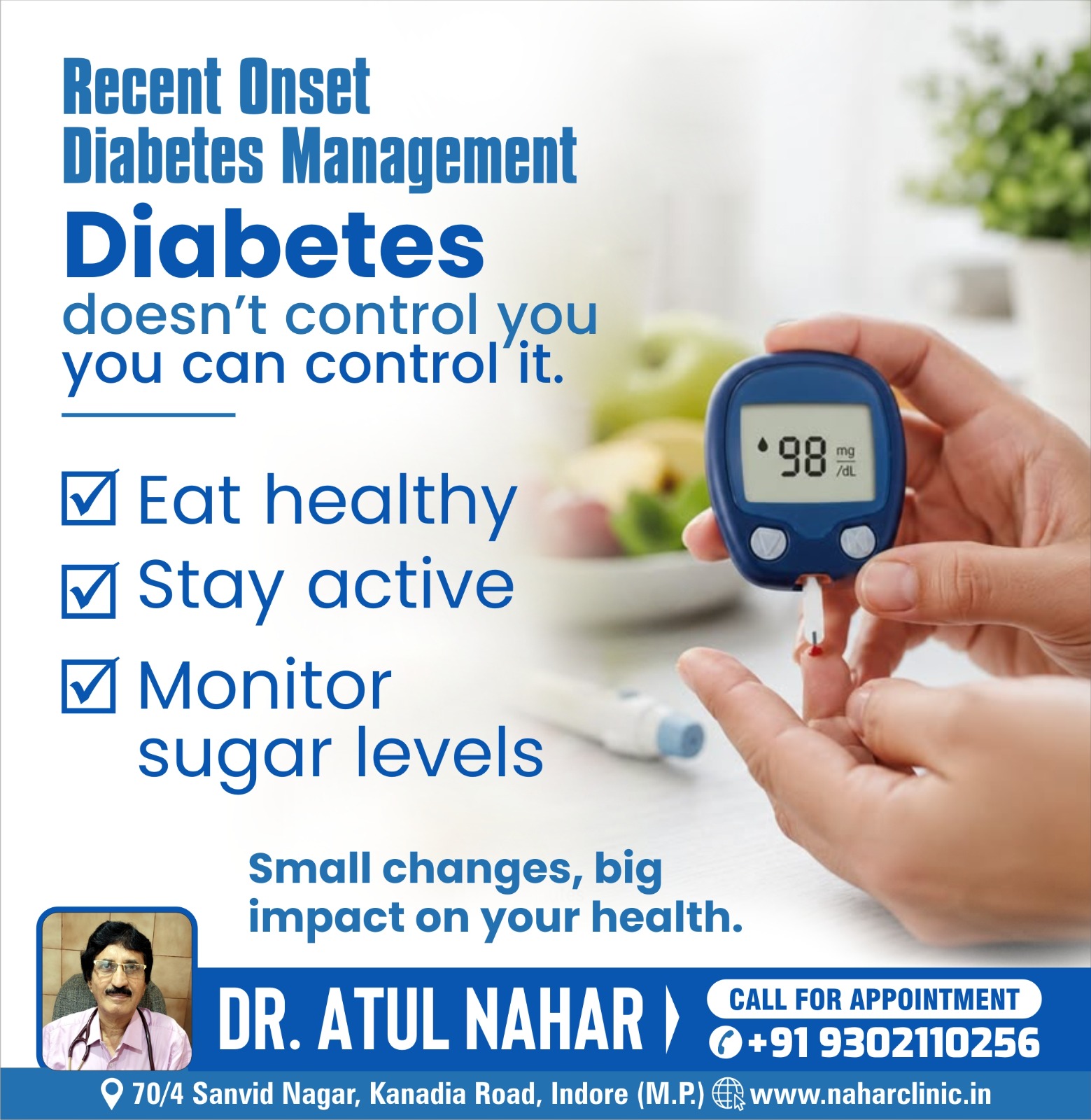
Newly Onset Diabetes Management in Indore
Expert Guidance for Newly Onset Diabetes Management
A newly diagnosed diabetes diagnosis can raise many questions—what to eat, how to monitor blood glucose, whether medication is needed, and how to prevent future complications. Newly Onset Diabetes Management focuses on understanding a person's condition and creating a practical, sustainable plan for blood sugar control.
Dr. Atul Nahar provides diabetes care in Indore, which focuses on a proper medical examination, individualized treatment, lifestyle guidance, and regular monitoring. Since diabetes can vary significantly from person to person, treatment decisions should be based on clinical findings, blood glucose patterns, medical history, medications, lifestyle, and other important health factors.
Early and appropriate management can help patients understand their condition and develop healthy habits that contribute to long-term diabetes care.
What is Newly Onset Diabetes?
Recent-onset diabetes refers to diabetes that has been recently diagnosed. It can be identified through a routine blood test or after symptoms such as increased thirst, frequent urination, unexplained weight changes, fatigue, or blurred vision. Some people may have obvious symptoms, while others may discover diabetes during a health check-up. A proper medical examination is essential because diabetes management is not just about reducing sugar intake—it involves understanding the patient's overall metabolic health and developing an appropriate treatment plan.
Why Early Diabetes Management is Important
The early stages of diabetes diagnosis are a crucial opportunity to understand the condition and develop sustainable habits.
1. Understanding Your Blood Sugar
When your doctor recommends regular monitoring, it can help identify blood glucose patterns and assess how lifestyle changes and treatments are working.
2. Treatment for Each Individual
Treatment for diabetes varies from person to person. Depending on the patient's condition, doctors may recommend lifestyle changes, medication, glucose monitoring, or a combination of approaches.
3. Nutrition and Lifestyle Guidance
Healthy eating, regular physical activity, adequate sleep, weight management where necessary, and other lifestyle factors can help improve diabetes management.
4. Reducing Long-Term Risks
Regular management of diabetes can help reduce the risk of complications affecting the eyes, kidneys, nerves, heart, and blood vessels.
5. Building Sustainable Habits
Instead of following a restrictive diet for a short period of time, patients can benefit from practical lifestyle changes that can be maintained over the long term.
Diabetes Management Recently Launched in Indore
Dr. Atul Nahar focuses on helping patients understand their diabetes and develop a personalized management approach. Consultations may include a review of symptoms, medical history, blood glucose reports, medications, lifestyle habits, and related tests. Depending on the patient's individual condition, diabetes management may include:
* Blood glucose assessment
* Review of diabetes-related tests
* Treatment planning for the individual patient
* Diet and lifestyle guidance
* Medication management when medically appropriate
* Blood glucose monitoring guidance
* Weight management advice where appropriate
* Assessment of diabetes-related risk factors
* Periodic follow-up and treatment review
A specific treatment plan should always be determined by a qualified medical professional after examining each patient.
Symptoms that may accompany diabetes
Recent-onset diabetes may include:
* Increased thirst
* Frequent urination
* Increased hunger
* Unexplained weight loss
* Persistent fatigue
* Blurred vision
* Slow wound healing
* Frequent infections
However, symptoms alone cannot confirm diabetes. Blood glucose testing and a proper medical examination are essential for diagnosis. If you experience serious symptoms such as vomiting, severe dehydration, confusion, difficulty breathing, or extreme weakness, seek immediate medical attention.
Nutrition and Lifestyle in Diabetes Management
Lifestyle management is an essential part of diabetes care. However, there is no single diet that is right for every person with diabetes.
A diabetes-friendly eating plan generally focuses on a balanced diet, eating the right portions, nutrient-rich foods, adequate dietary fiber, and avoiding foods and drinks that may contain excessive added sugar or calories.
Physical activity can also be beneficial for many people with diabetes. The type and intensity of exercise should be appropriate for a person's age, fitness level, medications, complications, and overall health.
Patients should consult their doctor before making major changes to their diet, exercise routine, or medication.
Monitoring Diabetes Over Time
Diabetes management doesn't end after initial diagnosis. Regular follow-ups help determine whether treatment goals are being met and whether changes are needed.
Depending on a person's condition, doctors may recommend monitoring:
* Blood glucose levels
* HbA1c
* Blood pressure
* Cholesterol and lipid profiles
* Kidney health
* Eye health
* Weight and other metabolic parameters
The frequency and type of monitoring should vary depending on the patient's condition and treatment plan.
Why Choose Dr. Atul Nahar for Diabetes Management?
Managing newly diagnosed diabetes requires medical expertise as well as clear communication. Dr. Atul Nahar provides diabetes management in Indore, focusing on each patient's needs and ongoing clinical assessment. Patients can discuss:
* Newly diagnosed diabetes
* Blood glucose control
* Diabetes medications
* Diet and lifestyle
* Blood glucose monitoring
* Meaning of HbA1c
* Weight management
* Diabetes risk factors
* Long-term diabetes prevention methods
* Follow-up and treatment changes
The goal is to help patients understand their condition and actively participate in their diabetes management.
Take the first step toward better diabetes control
Recently diagnosed with diabetes doesn't mean you have to deal with it alone. With proper medical guidance, regular monitoring, and consistent lifestyle changes, many people can manage diabetes effectively.
If you're looking for new diabetes management in Indore, consult Dr. Atul Nahar for a personalized assessment and diabetes care plan. Early professional guidance can help you understand your condition, identify appropriate treatment goals, and develop habits that will support long-term health.
Frequently Asked Questions
1. What are common symptoms of newly diagnosed diabetes?
Common symptoms may include increased thirst, frequent urination, increased hunger, unexplained weight loss, fatigue, blurred vision, slow wound healing, and frequent infections. Some people may not experience any significant symptoms.
2. Can newly diagnosed diabetes be managed with lifestyle changes alone?
This depends on the type and severity of diabetes, blood glucose levels, overall health, and other personal factors. Some people may require medication from the start, while for most patients, lifestyle changes are an essential part of management.
3. What tests are commonly used to diagnose diabetes?
Doctors may perform tests such as fasting blood glucose, HbA1c, oral glucose tolerance testing, or other tests depending on the clinical situation. Your doctor can recommend the appropriate test based on your symptoms and medical history.
4. Why is HbA1c important in diabetes management?
HbA1c gives an estimate of average blood glucose over the past two to three months. It can help doctors assess diabetes control and determine if treatment changes are needed.
5. Should I stop eating carbohydrates after being diagnosed with diabetes?
Generally, it's not necessary to eliminate carbohydrates completely. The type, quantity, portion size, and overall balance of carbohydrates matter. Dietary recommendations should be tailored to your medical needs.
6. Can exercise help manage diabetes?
Regular physical activity can improve insulin sensitivity and help with blood glucose management for many people. The right type of activity depends on your health, fitness level, medications, and any diabetes-related complications.
7. How often should I follow-up after a diabetes diagnosis?
Follow-up frequency depends on your blood glucose levels, treatment plan, medications, risk factors, and overall health. Your doctor can recommend an appropriate monitoring schedule.
8. Can newly diagnosed diabetes affect other organs?
Persistently elevated blood glucose can increase the risk of complications involving the eyes, kidneys, nerves, heart, and blood vessels. Proper diabetes management and recommended screening can help identify and manage these risks.
9. When should I seek urgent medical care for diabetes?
Severe vomiting, dehydration, confusion, difficulty breathing, extreme weakness, or abnormal blood glucose levels, along with other worrisome symptoms, may require immediate medical attention. Seek emergency care if symptoms appear severe or life-threatening.
Recent Onset Diabetes Management in Indore, Diabetes Management in Indore, Newly Diagnosed Diabetes Treatment in Indore, Diabetes Doctor in Indore, Diabetes Specialist in Indore, Recent Diabetes Diagnosis, New Diabetes Management, Diabetes Treatment Indore, Diabetes Care Indore, Blood Sugar Management Indore, Diabetes Consultation Indore, Newly Diagnosed Diabetes Doctor, Diabetes Management Specialist, Best Recent Onset Diabetes Management in Indore, Recent onset diabetes doctor in Indore, Newly diagnosed diabetes management in Indore, Diabetes management doctor near me in Indore
#DrAtulNahar #DiabetesManagement #DiabetesManagementIndore #DiabetesCare #DiabetesTreatment #DiabetesDoctorIndore #NewlyDiagnosedDiabetes #RecentOnsetDiabetes #BloodSugarManagement #DiabetesAwareness #DiabetesCareIndore #BloodSugarControl #HealthyLifestyle #DiabetesNutrition #DiabetesConsultation #HbA1c #DiabetesPrevention #EndocrineHealth #IndoreHealthcare #DiabetesSpecialistIndore
| Tags: | #Newly Onset Diabetes Management in Indore |


