
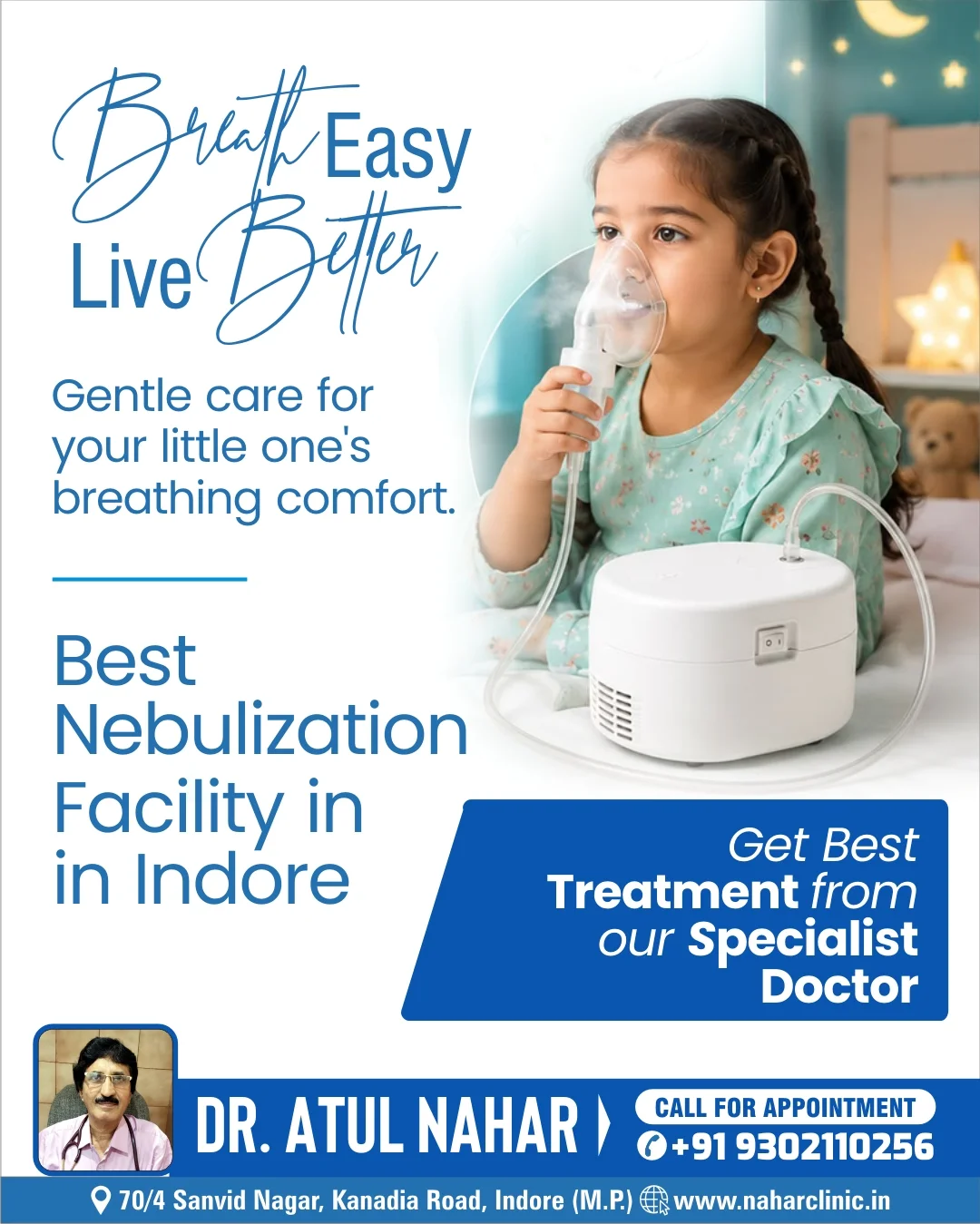
Best Nebulization Facility in Indore – Dr. Atul Nagar
Nebulization may sometimes be required as part of medical management for shortness of breath, wheezing, chest tightness, and certain respiratory conditions. A nebulizer is a device that converts a prescription liquid medication into a fine mist that can be inhaled through a mask or mouthpiece.
For patients seeking the best nebulization facility in Indore, Dr. Atul Nagar provides medical advice and nebulization care based on the patient's symptoms and clinical needs.
Nebulization is not a self-adjusting treatment for every cough, cold, or respiratory problem. A qualified healthcare professional should determine the medication, dosage, and nebulization needs, based on the patient's condition.
A professionally supervised nebulization facility can be useful when a patient requires inhaled medication and needs proper guidance on its use.
What is Nebulization?
Nebulization is a method of delivering certain prescription medications directly into the airways as a fine aerosol or mist. Unlike some oral medications, inhaled medications can be delivered directly into the airways. Depending on the medication and condition, nebulization may be used as part of the management of certain respiratory problems.
A nebulizer typically consists of:
* A nebulizer machine
* A medication chamber
* Tubing
* A mask or mouthpiece
* An air-compression or aerosol-generating mechanism
The patient breathes normally through the mask or mouthpiece, while the medication is converted into a mist.
Which medication is used depends entirely on the diagnosis and the doctor's prescription.
Nebulization Facility in Indore
When respiratory symptoms become troublesome, patients can find a convenient nebulization facility in Indore where treatment can be provided under proper medical guidance.
Dr. Atul Nagar can assess a patient's symptoms and determine whether nebulization is appropriate. Depending on the patient's condition, symptoms may include:
* Wheezing
* Difficulty breathing
* Chest tightness
* Cough
* Increased phlegm
* Shortness of breath
* Wheezing
* Shortness of breath
These symptoms can be caused by various illnesses. Therefore, nebulization should not be used simply because a patient is coughing or experiencing mild shortness of breath.
Whenever medically necessary, the underlying cause should be identified.
When is nebulization recommended?
In certain respiratory conditions, nebulization may be considered when inhaled medication is appropriate.
Depending on the diagnosis, it may be part of the treatment of conditions involving airway narrowing or bronchospasm. Examples include:
* Asthma
* Wheezing
* Bronchospasm
* Chronic respiratory diseases
* Acute respiratory problems
* Certain respiratory tract diseases
This decision depends on the patient's age, symptoms, diagnosis, severity, and the medication being prescribed.
Therefore, nebulization should be considered as one method of medication administration rather than a diagnosis or universal treatment for respiratory problems.
Nebulization vs. Inhalers
Patients sometimes assume that nebulizers are always more effective than inhalers. This is not necessarily true.
Medication can be delivered via inhalation using both methods, but the appropriate method depends on the medication, the patient, and the clinical situation.
Nebulizer
A nebulizer turns liquid medication into a mist that is inhaled through a mask or mouthpiece.
This can be useful for patients who have difficulty using an inhaler or when a specific medication must be given in nebulized form. Inhaler
Inhalers deliver medication in a portable form and are commonly used for many respiratory conditions.
With the right technique and the right medication, inhalers can be very effective.
Choosing between a nebulizer and an inhaler should be discussed with your treating healthcare professional.
What happens during nebulization?
A typical nebulization session involves several steps.
1. Medical Assessment
The patient's symptoms and medical condition are assessed to determine if nebulization is appropriate.
2. Medication Preparation
According to the doctor's instructions, the prescribed medication is placed in the nebulizer chamber.
3. Mask or Mouthpiece Installation
The patient uses a properly fitted mask or mouthpiece.
4. Inhalation
The nebulizer converts the medication into a mist, which the patient inhales.
5. Monitoring
Depending on the patient's condition, healthcare staff may monitor the patient during or after the session.
Treatment times may vary depending on the device and medication being used.
Why Medical Supervision is Important During Nebulization
Nebulization involves not just steam or water, but also medication.
Using the wrong medication or dosage can be harmful and potentially fatal. Professional supervision helps ensure that:
* The correct medication is used
* The recommended dosage is followed
* The device is used correctly
* The patient receives appropriate instructions
* Symptoms are monitored if necessary
Patients should not use leftover nebulization medication or someone else's prescription.
Conditions that may require a respiratory evaluation
Not every respiratory symptom requires nebulization.
Medical evaluation may be appropriate for:
* Persistent cough
* Frequent wheezing
* Frequent shortness of breath
* Chest tightness
* Shortness of breath
* Frequent respiratory infections
* Symptoms worsening at night
* Exercise-related breathing problems
* Need for frequent nebulization
Identifying the underlying cause is important because respiratory symptoms can be caused by a variety of conditions.
When is nebulization not sufficient?
Nebulization may relieve some airway-related symptoms under appropriate circumstances, but it does not necessarily address the underlying cause of every respiratory problem. For example, shortness of breath may have respiratory, cardiac, or other causes.
If symptoms are severe or unusual, the patient may need further medical evaluation.
Seek immediate medical attention for:
* Severe difficulty breathing
* Bluish lips or face
* Severe chest pain
* Confusion or unusual drowsiness
* Unable to speak comfortably due to shortness of breath
* Rapid worsening of symptoms
* Very low oxygen levels when measured
* Unconsciousness
These symptoms should not be treated with repeated nebulization at home.
Nebulization for Respiratory Infections
Some respiratory infections can cause cough, mucus, and airway irritation.
However, not every respiratory infection requires nebulization.
Treatment depends on the cause of the infection, the severity of symptoms, and the patient's medical condition.
Patients should avoid taking antibiotics, steroids, or other medications through a nebulizer unless specifically directed.
The Importance of Proper Nebulizer Hygiene
Nebulizer equipment should be cleaned according to the manufacturer's instructions.
Improper cleaning methods can lead to contamination of the equipment.
Patients should pay attention to:
* Cleaning the medication chamber
* Cleaning the mask or mouthpiece
* Proper drying
* Proper storage
* Regular replacement of disposable parts, if needed
The device should not be shared between people unless it is specifically designed and properly managed for such use.
Dr. Atul Nagar – Nebulization Care in Indore
For patients seeking nebulization treatment in Indore, Dr. Atul Nagar provides medical evaluation and guidance for patients with respiratory conditions where nebulization may be clinically appropriate.
Treatment should be based on:
Symptoms + Clinical Assessment + Diagnosis + Prescribed Medication
Patients should consult a qualified medical professional about recurring respiratory problems, rather than resorting to repeated nebulization without understanding the underlying cause.
Frequently Asked Questions
1. What is nebulization?
Nebulization is a method in which certain prescribed liquid medications are administered as a fine mist that can be inhaled through a mask or mouthpiece.
2. Is nebulization beneficial for coughs?
It depends on the cause of the cough. Nebulization is not automatically necessary for every cough. A doctor should determine whether inhaled medication is appropriate.
3. Can nebulization be used for asthma?
Depending on the patient's symptoms and the prescribed treatment plan, nebulized medication may be used for certain asthma conditions.
4. Is nebulization appropriate for children?
It can be used for children when medically indicated. The medication and dosage should be determined by a healthcare professional.
5. Is nebulization better than an inhaler?
Not necessarily. Both can be used to deliver inhaled medication, and the right choice depends on the patient, medication, and clinical condition.
6. Can I use nebulization without a prescription?
It is advisable not to use medication through a nebulizer without proper medical guidance. The medication and dosage should be determined based on the patient's condition.
7. Is nebulization the same as steam inhalation?
No. Nebulization delivers the prescribed medication as an aerosol mist, while steam inhalation uses hot water vapor.
8. How long does a nebulization session take?
The duration depends on the nebulizer, medication, and prescribed dosage.
9. Can elderly patients receive nebulization?
Yes, when medically appropriate. Their medical history, medications, and overall condition should be taken into account.
10. How often can nebulization be performed?
How often to do this depends on the medication and the patient's medical condition. Patients should follow the prescribed schedule rather than deciding on their own.
Best Nebulization Facility in Indore
Nebulization Facility in Indore
Nebulization Treatment in Indore
Nebulizer Treatment in Indore
Nebulization Centre in Indore
Nebulization Doctor in Indore
Dr Atul Nagar
Nebulizer Facility Indore
Nebulization for Asthma in Indore
Nebulization for Wheezing in Indore
Nebulization for Breathing Problems in Indore
Nebulization for Children in Indore
Nebulization for Adults in Indore
Nebulization for Elderly Patients
Respiratory Treatment in Indore
Breathing Problem Doctor in Indore
Wheezing Treatment in Indore
Asthma Care in Indore
Nebulizer Service in Indore
Respiratory Care Indore
Best nebulization facility near me in Indore
Best doctor for nebulization treatment in Indore
Nebulization facility for breathing problems in Indore
Nebulization treatment for wheezing in Indore
Nebulization for asthma patients in Indore
Nebulization facility for children in Indore
Doctor supervised nebulization in Indore
Nebulization treatment for respiratory problems in Indore
Best nebulizer treatment facility in Indore
Nebulization consultation in Indore
| Tags: | #Best Nebulization Facility in Indore |


