
| Category | Computerised ECG |
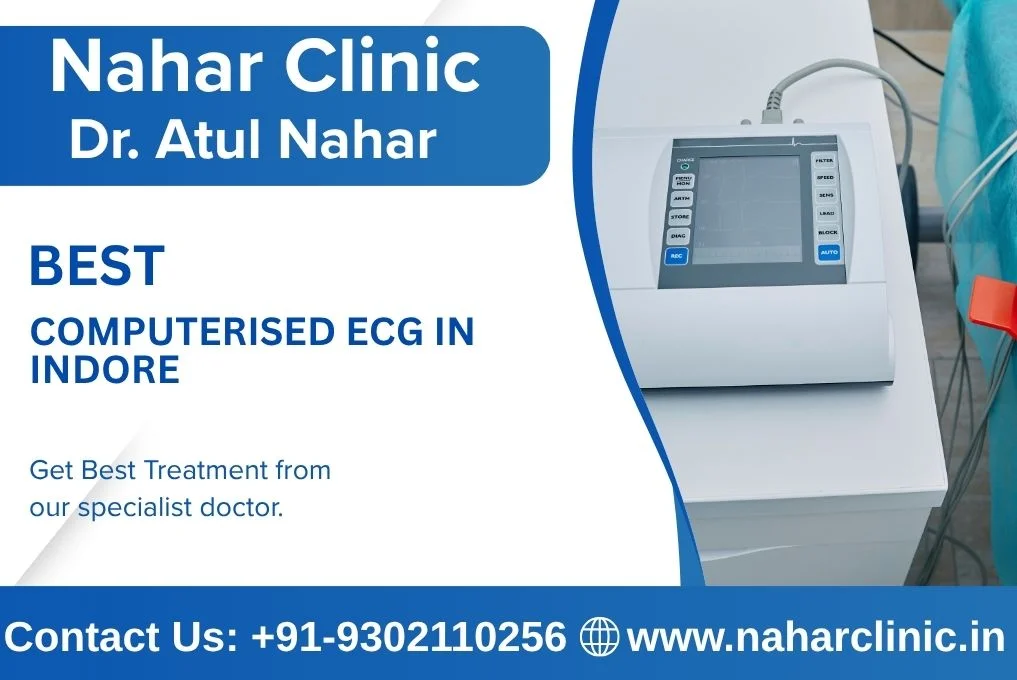
Computerized ECG in Indore
An electrocardiogram, commonly known as an ECG or EKG, is a simple, non-invasive test that records the heart's electrical activity. It provides essential information about the heart rate, rhythm, and the electrical signals passing through various parts of the heart.
Dr. Atul Nahar offers computerized ECG services in Indore for patients who require an assessment of their heart rhythm as part of their medical care. As a senior family physician with 42 years of clinical experience, he evaluates ECG results in conjunction with the patient's symptoms, medical history, blood pressure, current medications, and other relevant health factors.
A computerized ECG creates a digital record of the heart's electrical activity. Electrodes placed on the chest and limbs are connected to an ECG machine, which displays or prints the tracing for medical analysis.
Patients in Indore looking for computerized ECG services, a nearby ECG test, an ECG clinic, or a heart check-up that includes an ECG can consult Dr. Atul Nahar to determine if an ECG is appropriate for their symptoms or health condition.
What is a Computerized ECG?
A computerized ECG is a diagnostic test that digitally records the electrical signals generated with every heartbeat. This test does not send electricity into the body; instead, it detects and records the heart's natural electrical activity via electrodes placed on the skin. An ECG can provide information about the following:
Heart rate
Whether the rhythm is regular or irregular
Timing of electrical signals
Electrical conduction (flow of signals) within the heart
Rhythm abnormalities
Changes that may require further cardiac evaluation
An ECG is generally painless, quick, and non-invasive.
What does a "computerized" ECG mean?
In a computerized ECG system, the machine digitally processes the electrical signals detected by the electrodes. The tracing can be displayed on a screen, stored electronically, or printed for review.
The machine can provide automated observations, but these should not be considered a definitive diagnosis on their own. The ECG tracing must be reviewed by a qualified medical professional and interpreted based on the patient's symptoms and clinical condition. A computer-generated report cannot replace:
Medical history
Physical examination
Blood pressure check
Symptom evaluation
Previous reports
Laboratory tests
consultation, if needed
The purpose of a computerized ECG is to assist in clinical evaluation, not to diagnose heart disease entirely on its own.
Why is an ECG test performed?
Doctors may recommend an ECG when a patient exhibits symptoms that could be related to the heart or heart rhythm. Common reasons include:
Chest pain or discomfort
Feeling a rapid heartbeat (palpitations)
Skipped heartbeats
Rapid heartbeat
Slow heartbeat
Irregular pulse
Dizziness without an apparent cause
Fainting or feeling faint
Shortness of breath
Weakness without an apparent cause
Reduced exercise capacity
High blood pressure
Cardiac assessment related to diabetes
Monitoring of certain medications
Pre-procedure or pre-surgery assessment
Follow-up for a previously diagnosed heart condition
An ECG is often used as an initial test when symptoms suggest a heart problem. It can be performed in a clinic, a hospital, or prior to certain procedures.
ECG for Chest Discomfort
There can be many causes for chest discomfort. Some causes may be heart-related, while others could involve muscles, lungs, the digestive system, anxiety, or other conditions.
When experiencing chest discomfort, an ECG can help the doctor assess the heart's electrical activity. However, a normal ECG result does not necessarily rule out heart problems.
Depending on symptoms and risk factors, further tests may be required, such as:
Blood tests
Cardiac enzyme testing
Echocardiography
Stress testing
Holter monitoring
Chest imaging
Consultation with a cardiologist
Emergency hospital evaluation
Severe or persistent chest pain should not be managed solely through routine appointments.
ECG for Heart Palpitations
Palpitations can be experienced as:
Rapid heartbeat
A fluttering sensation in the chest
Pounding heartbeat
Skipped beats
Irregular heartbeat
Sudden awareness of the heartbeat
Palpitations can be caused by anxiety, physical activity, caffeine, fever, dehydration, anemia, thyroid issues, medications, or heart rhythm abnormalities.
An ECG can help identify an abnormal heart rhythm if it occurs during the test. It is one of the most commonly used tests to diagnose arrhythmia (irregular heart rhythm).
If palpitations occur intermittently, a routine ECG might not capture the abnormal rhythm. Based on the pattern of symptoms, a doctor may recommend tests that involve prolonged monitoring. ECG for Dizziness or Fainting
There can be several causes for dizziness and fainting, including:
Dehydration
Low blood pressure
Low blood sugar
Anemia
Medication side effects
Inner ear problems
Heart rhythm irregularities
Neurological conditions
An ECG may be recommended when a doctor suspects that an abnormal heart rhythm or an electrical conduction issue could be the cause of the symptoms.
Sudden fainting—especially during exercise or when accompanied by symptoms like chest pain, shortness of breath, or palpitations—requires immediate medical evaluation.
ECG for High Blood Pressure
Prolonged high blood pressure (hypertension) can increase the risk of heart-related diseases and place extra strain on the heart.
For some patients with high blood pressure, an ECG may be recommended to assess:
Heart rate
Heart rhythm
Electrical conduction
Changes resulting from strain on the heart
Symptoms such as chest discomfort or palpitations
The need for an ECG depends on the patient's blood pressure, age, symptoms, medical history, and associated risk factors. ECG for Patients with Diabetes
People with diabetes may be at a higher risk of heart disease, particularly if the diabetes is accompanied by high blood pressure, high cholesterol, obesity, tobacco use, or a family history of heart disease. A person with diabetes may be advised to undergo an ECG if they experience the following symptoms:
Chest discomfort
Shortness of breath
Rapid heartbeat (palpitations)
Unexplained fatigue
Dizziness
Reduced exercise tolerance
Irregular pulse
Other significant symptoms
An ECG should not be considered a substitute for the comprehensive management of diabetes and heart disease risks.
What can an ECG reveal?
An ECG can detect changes related to:
Abnormally fast heart rate
Abnormally slow heart rate
Irregular heartbeat
Specific types of arrhythmias
Disturbances in electrical conduction
Changes associated with an ongoing or past heart attack
Effects of certain medications
Changes requiring further cardiac evaluation
An ECG records the heart's rate, rhythm, and electrical conduction. It can provide indications of arrhythmias, heart attacks, and other heart-related issues; however, the results must be interpreted within a clinical context.
Can an ECG detect every heart problem?
No. While an ECG provides essential information, it cannot detect every heart condition, nor can it completely rule out every disease.
A standard ECG provides a record of heart activity for only a brief period. If symptoms are intermittent, the test result may appear normal when the patient is not experiencing symptoms.
A normal ECG does not mean that:
The possibility of any heart disease has been eliminated
Chest pain is not caused by a heart-related issue
No further testing is required
There are no occasional heart rhythm irregularities
Heart pumping function is normal
The coronary arteries are completely healthy
If symptoms or risk factors remain concerning, a doctor may recommend further testing.
An ECG offers a snapshot of heart activity
A standard ECG records heart activity for a short duration. It helps detect electrical changes present at the time of the test.
When symptoms come and go, a longer recording period may sometimes be necessary. According to MedlinePlus, if a standard ECG fails to capture intermittent symptoms, a portable ECG monitor may be recommended.
How is a computerized ECG performed?
A computerized ECG is typically performed while the patient lies still and relaxed.
The procedure generally involves the following steps:
The patient is asked to lie down on an examination couch.
Specific areas on the chest, arms, and legs are prepared for electrode placement.
Small, sticky electrodes are attached to the skin.
The electrodes are connected to the ECG machine via wires.
The patient remains relaxed and avoids talking or moving. The machine records the heart's electrical signals.
The tracing is displayed or printed.
Doctors review the report based on the patient's condition.
Electrodes detect electrical signals; they do not send any electric current into the body.
Is a computerized ECG painful?
A standard resting ECG is generally painless.
Patients may experience slight discomfort when:
Sticky electrodes are removed
Hair needs to be trimmed to ensure proper electrode contact
The skin is cleaned before electrode placement
Electrodes are placed on sensitive skin
This test does not involve needles, injections, or electric shocks.
How long does an ECG take?
The actual recording usually takes very little time. More time may be required for:
Patient preparation
Placing the electrodes
Repeating the tracing if movement causes interference
Consulting the doctor
Understanding the results
Discussing further tests
Patients should avoid moving or talking during the recording, as muscle movement can affect the quality of the tracing.
Preparing for an ECG test
Generally, very little preparation is needed for a standard ECG.
Patients may be advised to:
Wear comfortable clothing
Avoid applying oil, lotion, or cream to the chest
Bring previous ECG reports
Bring current prescriptions
Bring a list of ongoing medications
Inform the doctor about any cardiac devices implanted in the body
Mention any allergies or skin sensitivities
Clearly describe all current symptoms
Fasting is usually not required for a routine resting ECG, unless other tests are also scheduled.
Should medications be stopped before an ECG? Patients should not stop taking their regular medications before an ECG unless specifically instructed to do so by a qualified doctor.
Some medications can affect heart rate or rhythm, and this information may be essential for interpreting the tracing. Patients should bring a complete list of their medications or provide details about them.
This includes:
Blood pressure medications
Diabetes medications
Thyroid medications
Heart medications
Inhalers
Over-the-counter (OTC) medications
Herbal products
Nutritional supplements
ECG interpretation and medical consultation
The ECG tracing consists of various waves, intervals, and segments that represent different phases of the heart's electrical cycle.
Doctors can examine the following:
Heart rate
Heart rhythm
Electrical axis
Conduction intervals
Waveform patterns
Signs of rhythm abnormalities
Changes that may require further investigation
Comparison with previous ECG reports
Automated computer analysis can detect potential abnormalities, but the final clinical interpretation relies on professional review.
What does an abnormal ECG mean?
An abnormal ECG does not always indicate a serious heart condition.
An ECG may appear abnormal due to:
Temporary changes in heart rate
Electrode placement
Body movement
Medication effects
Electrolyte imbalance
Normal individual variations
Pre-existing heart changes
Active rhythm issues
Other underlying medical conditions
Doctors may compare the tracing with previous ECGs and consider symptoms, physical examinations, and test reports before providing guidance.
What happens after an abnormal ECG?
Depending on the results, doctors may recommend:
Repeat ECG
Blood tests
Electrolyte tests
Thyroid testing
Cardiac enzyme tests
Echocardiography
Holter monitoring
Ambulatory cardiac monitoring
Stress testing
Cardiologist consultation
Emergency hospital referral
The next step is not the same for every abnormal result.
Difference between ECG and echocardiography
Patients often confuse an ECG with an echocardiogram, but they are distinct tests.
ECG
An ECG primarily records:
Electrical activity
Heart rate
Heart rhythm
Electrical conduction
Echocardiography
An echocardiogram uses ultrasound to visualize:
Heart chambers
Heart valves
Pumping function
Structural abnormalities
Blood flow patterns
ECGs and echocardiograms can complement each other but cannot replace one another.
Difference between ECG and Holter monitoring
A routine ECG records heart activity for a short period. Holter monitoring records heart rhythm over an extended period, often while the patient continues their normal daily activities. Holter monitoring may be considered when:
Heartbeat is intermittent
Dizziness occurs frequently
Fainting happens without an apparent cause
Symptoms are absent during an ECG
Prolonged monitoring is required for a heart rhythm issue
The appropriate test depends on the patient's symptoms and medical evaluation.
ECG Before Medical Procedures
An ECG may be recommended before certain surgeries or procedures, especially for patients with:
Advanced age
Hypertension
Diabetes
Known heart disease
Chest symptoms
Irregular pulse
Multiple medical conditions
History of cardiac treatment
An ECG is not automatically required before every procedure. The decision depends on the planned procedure, the patient's age, symptoms, and health risks.
Computerized ECG for Senior Citizens
Senior citizens may have a higher likelihood of hypertension, diabetes, heart rhythm irregularities, and the use of multiple medications.
A computerized ECG may be recommended if an older adult experiences symptoms such as:
New chest discomfort
Palpitations
Unexplained shortness of breath
Dizziness
Fainting
Sudden weakness
Irregular pulse
Reduced exercise capacity
Medication-related concerns
Older adults should bring previous ECGs, prescriptions, and test reports for comparison. Computerized ECG for Younger People
Younger individuals may also require an ECG if they experience symptoms such as:
Palpitations
Fainting (syncope)
Chest discomfort
Unexplained rapid heartbeat
Shortness of breath
Family history of certain heart conditions
Symptoms occurring during physical activity
Suspected rhythm changes associated with medication
ECG recommendations should be based on clinical necessity rather than age alone.
Factors Affecting ECG Recording
The quality of the ECG tracing can be influenced by:
Patient movement
Talking during the test
Shivering/tremors
Improper electrode attachment
Oil or lotion on the skin
Incorrect electrode placement
Electrical interference
Loose wires
Excessive muscle tension
If interference affects the recording, the tracing may need to be repeated.
Importance of Previous ECG Reports
Previous ECG reports can help the doctor determine whether a finding is:
New
Long-standing
Unchanged
Related to previous treatment
Clinically significant
Patients should keep copies of their ECG and other cardiac reports whenever possible.
When Is an ECG Not Sufficient?
An ECG may be just one part of the assessment if the patient has:
Persistent chest pain
Recurrent fainting
Shortness of breath
Intermittent palpitations
Suspected heart failure
Possible coronary artery disease
Significant cardiac risk factors
Abnormal physical examination findings
Symptoms occurring during physical activity
Further testing may be required even if the ECG appears normal.
Medical decisions should not be made solely based on automated ECG statements without considering the patient's symptoms and risk profile.
When Should You Seek Emergency Care? A routine ECG appointment should not delay emergency hospital care.
Seek immediate medical help for the following:
Severe or persistent chest pain
Chest pressure or tightness
Chest pain radiating to the arm, shoulder, back, neck, or jaw
Sudden, severe shortness of breath
Fainting
Sudden weakness on one side
Difficulty speaking
Excessive sweating accompanied by chest discomfort
Blue-tinted lips
Confusion
Seizure
Rapid worsening of symptoms
Patients exhibiting these warning signs should go to the nearest emergency hospital immediately rather than waiting for routine treatment.
Common Misconceptions About ECGs
“A normal ECG means my heart is perfectly healthy”
While a normal ECG can be reassuring in certain situations, it cannot detect every heart-related condition.
“An ECG can predict every future heart attack”
An ECG cannot guarantee whether or not a person will have a heart attack in the future. Assessing cardiovascular risk involves considering factors such as blood pressure, cholesterol levels, diabetes status, tobacco use, family history, and more.
“Computer-generated data provides the final diagnosis”
Automated interpretation (analysis by a computer) serves only as supplementary information. A qualified medical professional should review the actual tracing.
“ECG and echocardiography are the same thing”
These are distinct tests. An ECG records electrical activity, whereas echocardiography uses ultrasound to evaluate the heart's structure and function.
“Only the elderly need an ECG test”
The need for an ECG test is based on symptoms and clinical requirements. Younger adults may also require an ECG when it is medically indicated.
Why choose Dr. Atul Nahar for a computerized ECG in Indore?
Dr. Atul Nahar is a senior family physician with 42 years of clinical experience. Rather than relying solely on machine-generated results for a diagnosis, he offers computerized ECG testing as part of a comprehensive medical evaluation. Patients can consult him regarding the following issues:
Computerized ECG recording
Evaluation of chest discomfort
Assessment of palpitations (rapid heartbeat)
Evaluation of irregular pulse
Assessment of dizziness and fainting
ECG evaluation related to high blood pressure
Cardiovascular assessment related to diabetes
Review of previous ECG reports
Concerns regarding heart rhythm and medications
Referral to a cardiologist if necessary
His approach involves reviewing the ECG alongside symptoms, medical history, current medications, blood pressure, and other relevant information.
Frequently Asked Questions
What is a computerized ECG?
A computerized ECG is a digital test that records the heart's electrical activity. The machine displays or prints a tracing, which is then reviewed by a medical professional.
Where can I get a computerized ECG done in Indore?
Computerized ECG facilities are available with Dr. Atul Nahar in Indore. Patients can contact the clinic to confirm appointment times and test availability.
Is an ECG painful?
No. A resting ECG is generally painless and non-invasive. Small electrodes are placed on the skin to record the electrical signals generated by the heart.
Does the ECG send electricity into the body? No. The ECG simply detects and records the heart's natural electrical activity.
How long does an ECG test take?
The recording itself usually takes just a few minutes, although preparation, consultation, and understanding the report may take longer.
Is it necessary to fast before an ECG?
Generally, fasting is not required for a standard resting ECG. However, if other tests are scheduled at the same time, please follow the clinic's instructions.
Can I take my regular medications before an ECG? Do not stop taking your regular medications unless advised to do so by your doctor. Bring a list of all your medications for an accurate assessment.
Why might a doctor recommend an ECG?
An ECG may be recommended to investigate symptoms such as chest discomfort, rapid heartbeat, irregular heartbeat, dizziness, fainting, or shortness of breath, or to assess certain medical conditions.
Can an ECG detect an irregular heartbeat?
Yes. If the heart rhythm is abnormal during the recording, it can be detected on the ECG.
Can an ECG detect a heart attack?
An ECG can show electrical changes associated with an ongoing or past heart attack. However, further tests and immediate medical evaluation may be required.
Does a normal ECG rule out heart disease?
No. A normal ECG does not mean there is no heart disease. Further testing may be necessary based on symptoms and risk factors.
What is the difference between an ECG and an echocardiogram?
An ECG records the heart's electrical activity. An echocardiogram uses ultrasound to examine the heart's structure, valves, and pumping function.
What is the difference between an ECG and Holter monitoring?
An ECG records heart activity for a short period. Holter monitoring records the heart rhythm over an extended period and is useful when symptoms occur intermittently.
Can children undergo an ECG?
Yes. Children can undergo an ECG if necessary. Depending on the results, you may be advised to discuss the report with a pediatrician or consult a specialist.
Can elderly individuals undergo a computerized ECG?
Yes. A computerized ECG is a non-invasive test that may be recommended based on an elderly person's symptoms and medical conditions.
Should I bring my previous ECG reports?
Yes. Previous ECG reports can help the doctor compare results and determine whether any changes are new or pre-existing.
Does an abnormal ECG always indicate serious heart disease?
No. An abnormal ECG can result from various causes. The results must be interpreted in conjunction with symptoms, clinical examinations, and other tests.
Is a computer-generated ECG result always accurate?
While the machine can provide an automated interpretation, the tracing should be reviewed by a qualified medical professional before drawing clinical conclusions.
If I am experiencing severe chest pain, can I wait for an ECG at the clinic?
No. Symptoms such as severe chest pain, sudden shortness of breath, fainting, or signs of a stroke require immediate emergency hospital care.
Get a Computerized ECG in Indore
When a patient exhibits relevant symptoms or has medical risk factors, a timely ECG can help assess heart rate, rhythm, and electrical activity.
Consult Dr. Atul Nahar in Indore for a computerized ECG and related medical evaluations regarding:
Chest discomfort
Palpitations
Rapid or irregular heartbeat
Dizziness
Fainting
Unexplained shortness of breath
High blood pressure (Hypertension)
Risk of heart disease associated with diabetes
Medication monitoring
Review of previous ECGs
Please contact the clinic to confirm appointment availability and any preparation instructions for the ECG.
Computerised ECG in Indore | Computerised ECG Near Me in Indore | ECG Test in Indore | ECG Test Near Me in Indore | Computerized ECG Test in Indore | Digital ECG in Indore | ECG Clinic in Indore | ECG Facility in Indore | ECG Check-up in Indore | Heart ECG Test in Indore | Heart Rhythm Test in Indore | Electrocardiogram Test in Indore | Electrocardiography in Indore | ECG for Chest Pain in Indore | ECG for Palpitations in Indore | ECG for Irregular Heartbeat in Indore | ECG for Dizziness in Indore | ECG for Fainting in Indore | ECG for Breathlessness in Indore | ECG for High Blood Pressure in Indore | ECG for Diabetes Patients in Indore | ECG for Senior Citizens in Indore | ECG for Adults in Indore | Routine ECG Test in Indore | Resting ECG in Indore | ECG Report Consultation in Indore | ECG Interpretation in Indore | ECG Doctor in Indore | Physician for ECG Test in Indore | Family Physician with ECG Facility in Indore | General Physician with ECG Facility in Indore | Heart Check-up with ECG in Indore | Cardiac Screening with ECG in Indore | Preventive Heart Check-up in Indore | ECG Before Surgery in Indore | Preoperative ECG in Indore | Same Day ECG Test in Indore | Affordable ECG Test in Indore | Quick ECG Test in Indore | ECG Testing Centre in Indore | ECG Diagnostic Test in Indore | ECG Machine Test in Indore | Computerised Heart Test in Indore | Digital Heart Rhythm Test in Indore | ECG Consultation Near Me | ECG Centre Near Me in Indore | Heart Test Near Me in Indore | ECG Clinic Near Me in Indore | Dr. Atul Nahar Computerised ECG | Dr. Atul Nahar ECG Test in Indore | Dr. Atul Nahar ECG Facility | Dr. Atul Nahar Heart Check-up | Dr. Atul Nahar ECG Consultation | Senior Family Physician with ECG in Indore | Computerised ECG for Chest Discomfort in Indore | ECG for Fast Heartbeat in Indore | ECG for Slow Heartbeat in Indore | ECG for Skipped Heartbeat in Indore | ECG for Cardiac Risk Assessment in Indore | ECG for Hypertension and Diabetes in Indore | ECG Test for Senior Citizen Near Me | Doctor for Computerised ECG in Indore


